Understanding Branding Services
What are Brand Design Services?
Branding services are much more than just the creation of a logo. It’s a holistic opportunity to tell your business’s unique story, and capture your audience’s attention in a crowded market. This involves identifying and honing your brand voice, understanding your audience, and articulating your unique selling points.
Comprehensive branding services include strategy-based design methodologies focused on driving tangible results. This includes developing a visual identity that reinforces specific themes and facilitates growth. In practice, this means delivering a full suite of assets—from creative strategy and visual moodboards to bespoke color palettes and curated typography. These are designed to work together to represent a business authentically. As a top Bellingham design, Fresh Lines Creative provides a guided experience. We ensure clients feel represented throughout the brand development process.

Importance of Effective Brand Design
Effective branding is why customers choose your product or service over a competitor’s. It serves as your best opportunity to make a lasting impression and inspire long-term loyalty. In a modern, millennial market, simply offering a good product at a fair price is no longer sufficient. Businesses must stand out and position themselves as leaders in their industry.
Branding strategy helps unveil the WHY behind a business, allowing owners to approach every decision with confidence and clarity. By understanding your target audience, you can tailor content to them. This allows you to build recognition and loyalty, emotionally connecting to your community. High-quality branding and design provide a return on investment by creating a cohesive experience that strengthens your mission and boosts growth.
The Process of Brand Design in Bellingham
Research and Strategy Development
The journey of brand development at Fresh Lines Creative begins with a robust Phase One: Discovery. This initial stage involves a client questionnaire designed to capture the business’ vision, goals, and inspiration. We often ask clients to put together a Pinterest board to help identify preferred color palettes and typography styles. This is followed by Phase Two: Strategy, where the research is synthesized into a cohesive brand story and visual direction.
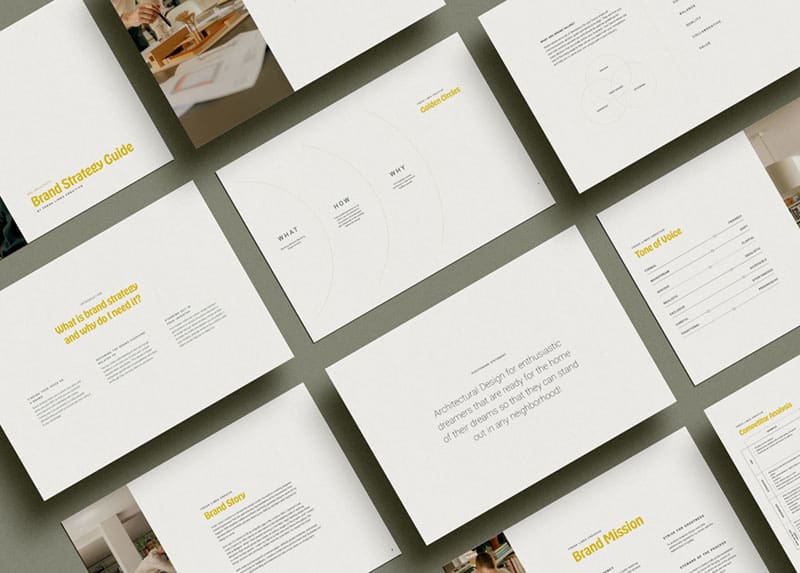
A critical component of this research is identifying the Golden Circles, the What, How, and Why of the organization. Strategy sessions often include customer journey mapping and competitor analysis to ensure the brand is positioned effectively within the Bellingham market and beyond. We also utilize brand archetypes—systematic psychological frameworks—to help bridge the connection between the core desires of the audience and the brand’s values. At the end of this stage clients get a Brand Strategy Guide. This document outlines the mission statements, positioning, and opportunities that serve as a guide for future marketing and brand design.
Creating Visual Identity
Once the strategy is anchored, the process moves into visual creation. Phase Three: Brand Design and Refine focuses on translating strategy into tangible assets. We present initial brand identity concepts, often including up to three distinct options with primary logos and marks. These concepts are not created in a vacuum; they incorporate the colors, typography, and design styles discussed and agreed upon during the strategy phase.
The design process is collaborative and iterative. Clients provide feedback on concept presentations, which frequently include application examples like business cards or social media mockups to help visualize the brand in the real world. This phase allows for multiple rounds of revisions to ensure every element feels perfectly in tune with the brand’s intended personality. The goal is to create a visual identity that’s not only beautiful but also a strategic tool that facilitates growth.
Key Components of Successful Brand Design
Logo Design
Logo design is the visual cornerstone of any identity, but at Fresh Lines Creative, it is treated as a versatile system rather than a single static image. A successful logo suite includes a Primary Logo, which acts as the main identifier for the brand. However, true brand flexibility requires variations such as Secondary Logos, Brand Marks, and Badges. These alternative marks are essential for different applications, ensuring the brand remains legible on everything from large signs to web favicons.
Professional logo design also considers the technical requirements of modern business. Assets are provided in multiple formats, including JPEG, PNG, AI, EPS, and PDF, optimized for both web and print use. This ensures the logo maintains its integrity across everything from high-resolution marketing materials to digital images.
Color Psychology and Typography
The selection of a bespoke color palette and typography suite is fundamental to building a brand’s emotional resonance. Colors are chosen for aesthetics and psychological impact. For example, vibrant palettes create excitement, while deep blue or green palettes convey professionalism. Fresh Lines Creative provides detailed color codes (Hex, RGB, and CMYK) to ensure consistency across all digital and print platforms.
Typography styling is equally critical, as fonts can highlight specific brand values such as being clean and approachable or elevated and professional. A curated typography suite often includes a mix of serif and sans-serif fonts to differentiate between headlines and body copy. This creates a visual hierarchy in marketing materials. Together, color and typography create a brand pattern that reinforces your tone of voice, ensuring every piece of content feels like part of the same story.

Building Brand Recognition
Consistency in Branding
The key to building brand recognition is unwavering consistency across every customer touchpoint. Once the brand design is finalized, Fresh Lines Creative produces a Detailed Brand Style Guide. This comprehensive document acts as a manual for the business, outlining the exact ways to use logo versions, color palettes, and fonts. Consistency ensures that whether a customer sees a business card, an email signature, or a letterhead, they immediately recognize the brand.
Beyond the primary assets, brand recognition is bolstered by secondary elements like brand patterns, custom iconography, and specific image directions. Applying these elements uniformly to marketing materials creates a cohesive experience that builds audience trust. This professional structure allows creative magic to flow without the risk of your brand identity becoming disjointed as the company grows.
Beyond the primary assets, brand recognition is bolstered by secondary elements like brand patterns, custom iconography, and specific image directions. When these elements are applied uniformly to all marketing materials, they create a cohesive brand experience that builds trust with the audience. This professional structure allows the creative magic to flow without the risk of the brand identity becoming disjointed or misplaced as the company grows.
Utilizing Digital Platforms
In today’s digital landscape, a brand must be optimized for online interaction. Fresh Lines Creative supports this by providing formatted social media profile and banner images as part of its branding packages. To maintain consistency on platforms like Instagram, Facebook, and TikTok, we create custom post templates, story backgrounds, and highlight covers. These tools allow business owners to share content that is always on-brand without having to design each post from scratch.
Furthermore, for businesses using Canva, Fresh Lines provides a Canva Brand Kit and templates to empower teams to implement their new branding easily. Digital branding also extends to email signature design and website favicons, ensuring that the visual identity is present in every digital correspondence and browser tab. By utilizing these digital assets, this Bellingham agency helps local businesses project a professional image while maintaining their authentic local roots.
Measuring the Impact of Brand Design
Brand Awareness Metrics
Measuring the success of a brand design is vital for bridging creative vision with business growth. Fresh Lines Creative utilizes a Measured Success framework to track performance through specific KPIs categorized by the customer journey. Tracking search visibility and recognition helps determine if the brand effectively reaches audiences who are unaware of the problems you solve.
Metrics such as click-through rates and social interaction reveal how deeply the brand story resonates with the community. Tools like Google Search Console can identify keywords and trends to measure visibility in a crowded market. By synthesizing this data, businesses can confirm if they are moving toward their goals and identify areas where branding strategy needs refinement.
Customer Engagement and Feedback
Qualitative data is just as important as quantitative metrics when measuring brand impact. Audience sentiment and feedback are used to gauge emotional resonance and authority in the industry.
Monitoring brand mentions and analyzing sentiment from direct interactions helps a business identify white space opportunities or competitive threats. When customers feel seen and heard through the design process, they are more likely to become loyal advocates. Ultimately, professional brand design is validated by higher engagement, increased lead generation, and ROI, ensuring the brand remains the preferred choice.